
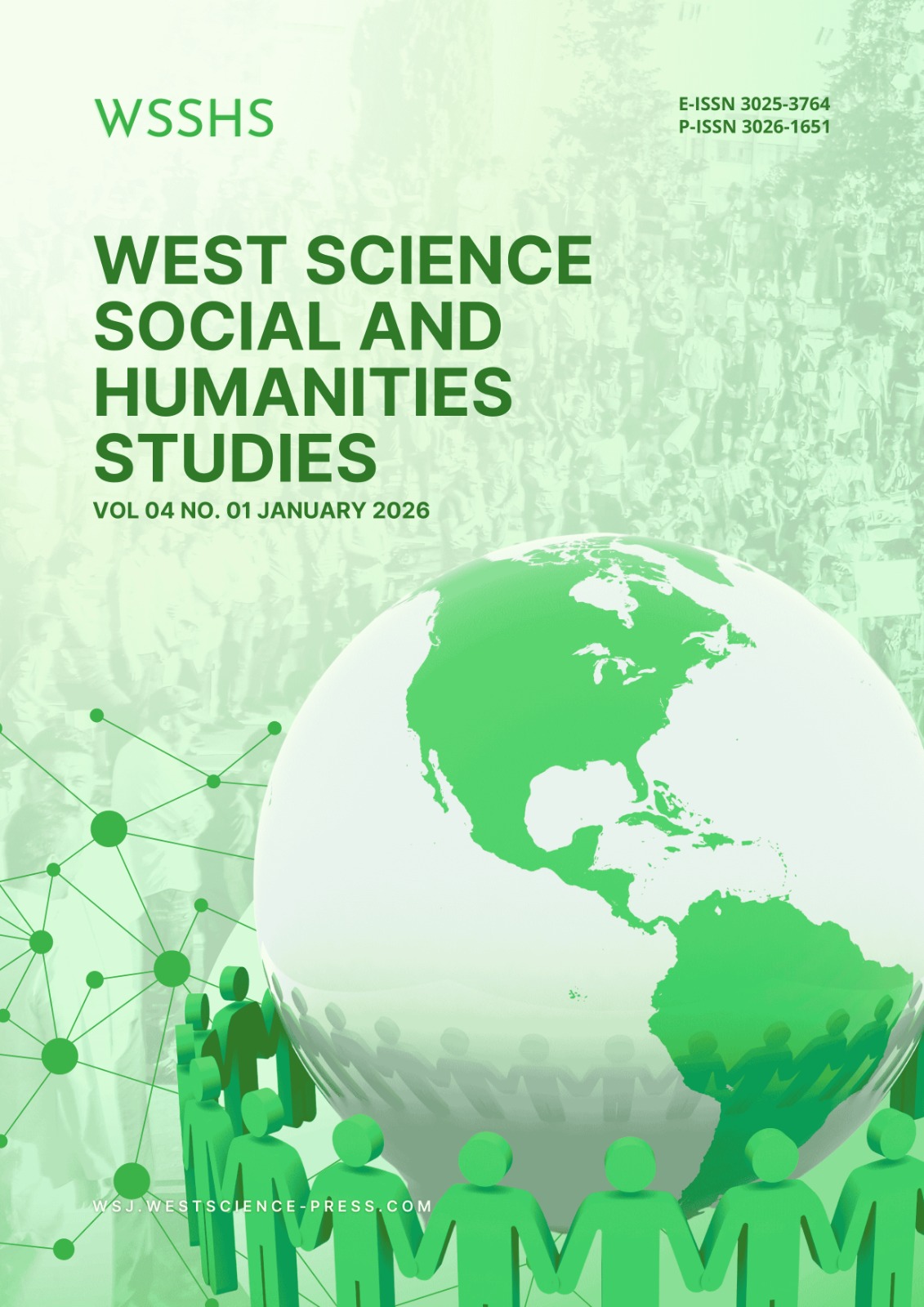
Green Innovation in Young Entrepreneurship: A Global Bibliometric Study
DOI:
https://doi.org/10.58812/wsshs.v4i01.2610Keywords:
Green Innovation, Young Entrepreneurship, Sustainability, Entrepreneurship Education, Sustainable Development, Bibliometric AnalysisAbstract
This study presents a global bibliometric analysis of "Green Innovation in Young Entrepreneurship" to explore the intersection of sustainability, entrepreneurship, and youth education. Through keyword co-occurrence, co-authorship, and citation network analyses, the study highlights the increasing academic focus on the role of young entrepreneurs in driving sustainable innovation. The research identifies key themes such as "green entrepreneurship," "sustainable development," and "entrepreneurship education," revealing a growing body of literature that emphasizes the importance of educating young entrepreneurs to address global environmental challenges. Despite significant progress in this research domain, challenges remain, particularly in integrating training and e-learning systems into the entrepreneurial ecosystem. The study underscores the need for a more inclusive and diverse approach to support young entrepreneurs, especially in emerging economies, as they contribute to building a sustainable future.
References
[1] J. Gunawan and K. Fraser, “Exploring young and green entrepreneurship in Indonesia: An introduction,” J. Asian Bus. Strateg., vol. 6, no. 9, pp. 185–194, 2016.
[2] D. Kurniaty, A. Subagio, L. Yuliana, S. Ridwan, and H. Fairuz, “Factors influencing the young entrepreneurs to implement green entrepreneurship,” in 20th International Symposium on Management (INSYMA 2023), Atlantis Press, 2023, pp. 526–534.
[3] K. Nuringsih and M. N. Nuryasman, “The role of green entrepreneurship in understanding Indonesia economy development sustainability among young adults,” Stud. Appl. Econ., vol. 39, no. 12, 2021.
[4] S. Dissanayake, B. K. Dhar, P. R. Weerathunga, and M. Wickramasinghe, “Youth Entrepreneurship Narratives in South Asia: Digital Transformation, Green Innovation, and Sustainable Development Pathways,” Sustain. Dev., 2025.
[5] C. Yin, M. P. Salmador, D. Li, and M. B. Lloria, “Green entrepreneurship and SME performance: The moderating effect of firm age,” Int. Entrep. Manag. J., vol. 18, no. 1, pp. 255–275, 2022.
[6] B. A. Soomro, I. A. Ghumro, and N. Shah, “Green entrepreneurship inclination among the younger generation: An avenue towards a green economy,” Sustain. Dev., vol. 28, no. 4, pp. 585–594, 2020.
[7] M.-A. Galindo-Martín, M.-S. Castaño-Martínez, and M.-T. Méndez-Picazo, “The relationship between green innovation, social entrepreneurship, and sustainable development,” Sustainability, vol. 12, no. 11, p. 4467, 2020.
[8] B. A. Soomro, N. F. Moawad, U. N. Saraih, N. A. A. Abedelwahed, and N. Shah, “Going green with the green market and green innovation: building the connection between green entrepreneurship and sustainable development,” Kybernetes, vol. 53, no. 4, pp. 1484–1504, 2024.
[9] R. B. Soomro, I. A. Mirani, M. Sajid Ali, and S. Marvi, “Exploring the green purchasing behavior of young generation in Pakistan: Opportunities for green entrepreneurship,” Asia Pacific J. Innov. Entrep., vol. 14, no. 3, pp. 289–302, 2020.
[10] C. Ponce Lara, “Green Startups Led by Young Entrepreneurs in Tunisia: Transforming the Future With Sustainable Innovation,” Dig. Middle East Stud., vol. 34, no. 3, p. e70002, 2025.
[11] M. Asad, M. Aledeinat, T. Majali, D. A. Almajali, and F. D. Shrafat, “Mediating role of green innovation and moderating role of resource acquisition with firm age between green entrepreneurial orientation and performance of entrepreneurial firms,” Cogent Bus. Manag., vol. 11, no. 1, p. 2291850, 2024.
[12] S. V Rajkamal, J. S. Velmurugan, and M. Suryakumar, “Green entrepreneurs challenges and innovation: the struggles they face,” Int. J. Prof. Bus. Rev. Int. J. Prof. Bus. Rev., vol. 7, no. 2, p. 7, 2022.
[13] G. A. Anghel and M. A. Anghel, “Green entrepreneurship among students—social and behavioral motivation,” Sustainability, vol. 14, no. 14, p. 8730, 2022.
[14] N. Tihomirova and D. Atanasova, “Green Entrepreneurship Above Borders-Change of the Model of Opinion of Entrepreneurship and Innovation in Teaching Through Mixed Training,” in EDULEARN20 Proceedings, IATED, 2020, pp. 4239–4246.
[15] N. Donthu, S. Kumar, D. Mukherjee, N. Pandey, and W. M. Lim, “How to conduct a bibliometric analysis: An overview and guidelines,” J. Bus. Res., vol. 133, pp. 285–296, 2021.
[16] Q. Ye, R. Zhou, M. A. Anwar, A. N. Siddiquei, and F. Asmi, “Entrepreneurs and environmental sustainability in the digital era: Regional and institutional perspectives,” Int. J. Environ. Res. Public Health, vol. 17, no. 4, p. 1355, 2020.
[17] I. Hussain et al., “Linking green and sustainable entrepreneurial intentions and social networking sites; the mediating role of self-efficacy and risk propensity,” Sustainability, vol. 13, no. 13, p. 7050, 2021.
[18] D. Krajnc, D. Kovačič, E. Žunec, K. Brglez, and R. Kovačič Lukman, “Youth awareness and attitudes towards a circular economy to achieve the green deal goals,” Sustainability, vol. 14, no. 19, p. 12050, 2022.
[19] B. A. Soomro, H. K. Almahdi, and N. Shah, “Perceptions of young entrepreneurial aspirants towards sustainable entrepreneurship in Pakistan,” Kybernetes, vol. 50, no. 7, pp. 2134–2154, 2021.
[20] E. R. Mambali, M. S. Kapipi, and I. A. Changalima, “Entrepreneurship education and business and science students’ green entrepreneurial intentions: The role of green entrepreneurial self-efficacy and environmental awareness,” Int. J. Manag. Educ., vol. 22, no. 2, p. 100987, 2024.
[21] T. Zhang, S. ul Haq, X. Xu, and M. Nadeem, “Greening ambitions: exploring factors influencing university students’ intentions for sustainable entrepreneurship,” Int. Entrep. Manag. J., vol. 20, no. 4, pp. 2863–2899, 2024.
[22] T. de St Croix, I. McGimpsey, and J. Owens, “Feeding young people to the social investment machine: The financialisation of public services,” Crit. Soc. Policy, vol. 40, no. 3, pp. 450–470, 2020.
[23] L. Nibbi, D. Chiaramonti, and E. Palchetti, “Project BBChina: A new master program in three Chinese universities on bio-based circular economy; from fields to bioenergy, biofuel and bioproducts,” Energy Procedia, vol. 158, pp. 1261–1266, 2019.
[24] A. Ghodbane and A. Alwehabie, “Academic entrepreneurial support, social capital, and green entrepreneurial intention: does psychological capital matter for young Saudi graduates?,” Sustainability, vol. 15, no. 15, p. 11827, 2023.
Downloads
Published
Issue
Section
License
Copyright (c) 2026 Loso Judijanto

This work is licensed under a Creative Commons Attribution-ShareAlike 4.0 International License.


















 Facebook
  Instagram
  Twitter
  Youtube
  westscience.journals@gmail.com