
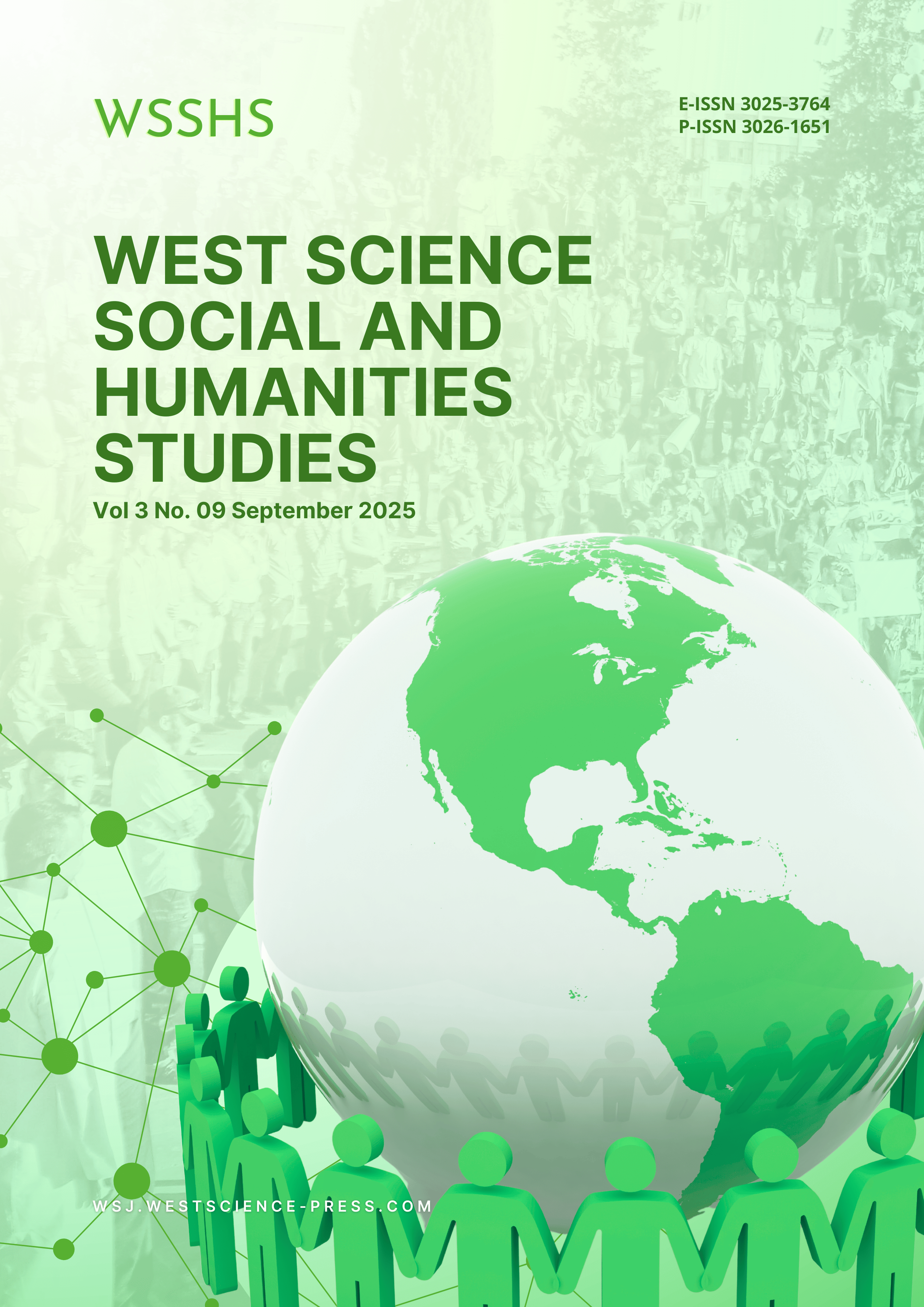
To What Extent Do Organizational Reputation, Personal-Organizational Value Fit, And Perceived Growth Opportunity Influence The Retention Intentions of Millennial Employees in Jakarta's Fintech Sector?
DOI:
https://doi.org/10.58812/wsshs.v3i09.2218Keywords:
Organizational Reputation, Value Fit, Growth Opportunities, Retention Intention, Millennials, FintechAbstract
This study investigates the influence of organizational reputation, personal–organizational value fit, and perceived growth opportunities on millennial employee retention intentions in Jakarta’s fintech sector. Using a quantitative research design, data were collected through questionnaires distributed to 130 millennial employees working in various fintech companies. Responses were measured on a five-point Likert scale, and the data were analyzed using SPSS version 25 through validity, reliability, classical assumption, and multiple regression tests. The findings show that organizational reputation, value fit, and growth opportunities each have a significant and positive effect on employee retention intention. Among these, perceived growth opportunities emerged as the strongest predictor, indicating that millennials are highly motivated to stay when they perceive clear pathways for professional development and advancement. These results emphasize the importance for fintech firms to strengthen their reputation, foster value alignment, and provide structured career growth opportunities to effectively retain millennial talent. The study contributes to both theory and practice by extending employee retention research into the fintech context of an emerging economy while offering actionable strategies for human resource management.
References
[1] I. Suhardjo, N. Tan, and K. Andreas, “IS FINTECH A SUSTAINABLE BUSINESS MODEL FOR THE FUTURE? EMPIRICAL STUDY IN INDONESIA,” Akurasi J. Stud. Akunt. dan Keuang., vol. 7, no. 1, pp. 67–88, 2024.
[2] A. Aswirah, A. Arfah, and S. Alam, “Perkembangan Dan Dampak Financial Technology Terhadap Inklusi Keuangan Di Indonesia: Studi Literatur,” J. Bisnis Dan Kewirausahaan, vol. 13, no. 2, pp. 180–186, 2024.
[3] H. Wijaya, C. M. Firdausy, and I. Widjaja, “Sustaining Fintech Usage in Jarkarta: The Interplay of Perceived Benefits, Risks and Trust,” Int. J. Res. Sci. Innov., vol. 11, no. 9, pp. 406–419, 2024.
[4] A. Alkaabi, M. Alghizzawi, M. K. Daoud, and I. Ezmigna, “Factors affecting employee turnover intention: An integrative perspective,” in The AI Revolution: Driving Business Innovation and Research: Volume 2, Springer, 2024, pp. 737–748.
[5] H. F. Nurhalizah, A. R. Sridadi, and A. Eliyani, “Faktor intention to stay pada karyawan dalam lingkungan kerja: Pendekatan systematic literature review,” J. Manag. Bus., vol. 15, no. 1, pp. 37–48, 2024.
[6] E.-M. Lee and K. Akmal, “Empowering Social Identity through ESG: Mediating Roles of Credibility, Prestige, and Active Participation,” 경영교육연구, vol. 39, no. 6, pp. 91–111, 2024.
[7] M. T. Febriyantoro, “Pengaruh retensi karyawan terhadap turnover intention dan kinerja karyawan,” Center for Open Science, 2023.
[8] R. I. B. Swastasi and D. Sartika, “MILLENNIALS’INTENTION TO STAY: THE ROLE OF PERSON-ORGANIZATION FIT AND JOB SATISFACTION,” J. Bisnis dan Manaj., vol. 22, no. 2, pp. 81–96, 2021.
[9] T. Tabane, A. Bosch, and G. Roodt, “Organisation value-person value congruence and the relation to organisational commitment,” South African J. Labour Relations, vol. 37, no. 1, pp. 39–60, 2013.
[10] E. M. González-Flores and C. Reich-López, “Variables que inciden en la retención de talento de la generación Milennial, caso Facultad de Contaduría Pública y Administración de la UANL.,” Innovaciones de Negocios, vol. 21, no. 42, pp. 52–71, 2024.
[11] M. N. Ndlela, “A stakeholder approach in managing reputation,” in Crisis communication: A stakeholder approach, Springer, 2018, pp. 77–109.
[12] S. Helm, “A matter of reputation and pride: Associations between perceived external reputation, pride in membership, job satisfaction and turnover intentions,” Br. J. Manag., vol. 24, no. 4, pp. 542–556, 2013.
[13] P. A. Argenti and B. Druckenmiller, “Reputation and the corporate brand,” Corp. Reput. Rev., vol. 6, no. 4, pp. 368–374, 2004.
[14] H. Şen, C. Erbil, and E. Aydoğan, “Etik Liderliğin İşten Ayrılma Niyetine Etkisinde Algılanan Kurumsal İtibarın Rolü,” İşletme Araştırmaları Derg., vol. 11, no. 2, pp. 876–889, 2019.
[15] P. S. Swetha and G. Padmavathy, “Value congruence: A fit between personal and organizational values,” Int. J. Adv. Res. Dev., vol. 3, no. 12, pp. 28–32, 2018.
[16] S. Irawati and R. Febriani, “Individual value, organizational commitment and turnover intention in the millenial workforce,” in Economic Sustainability and Social Equality in the Technological Era, Routledge, 2025, pp. 292–304.
[17] R. Akbar, “Comparison and Evaluation of How Employees with Strong Versus Weak PO Fit Respond to Transformational Changes in Organizational Structure or Culture,” Soc. Sci. Rev. Arch., vol. 2, no. 2, pp. 1609–1614, 2024.
[18] B. Z. Posner, “Another look at the impact of personal and organizational values congruency,” J. Bus. Ethics, vol. 97, no. 4, pp. 535–541, 2010.
[19] N. G. Zahirah and A. Satrya, “The influence of career growth and perceived organizational support on turnover intention: The role of organizational commitment among Indonesian millennial employees,” EKOMBIS Rev. J. Ilm. Ekon. Dan Bisnis, vol. 12, no. 3, pp. 3129–3146, 2024.
[20] J. M. Kohlmeyer III, R. J. Parker, and T. Sincich, “Career-related benefits and turnover intentions in accounting firms: The roles of career growth opportunities, trust in superiors, and organizational commitment,” in Advances in accounting behavioral research, Emerald Publishing Limited, 2017, pp. 1–21.
[21] H. Nouri and R. J. Parker, “Career growth opportunities and employee turnover intentions in public accounting firms,” Br. Account. Rev., vol. 45, no. 2, pp. 138–148, 2013.
[22] Q. Weng and Y. Xi, “The relationship between career growth, organizational commitment and turnover intention: a comparison between industrial clusters and non-clusters,” Forecasting, vol. 32, no. 1, pp. 23–30, 2013.
[23] J. Cheng, Y. He, and X. Cheng, “Does career growth really matter to knowledge employees? A mechanism research exploration of perceived career growth opportunities on turnover intention of knowledge employees,” in 2016 6th International Conference on Management, Education, Information and Control (MEICI 2016), Atlantis Press, 2016, pp. 692–698.
[24] R. Sahputra, “Pengaruh Kompensasi, Job Satisfaction, dan Perceived Job Alternative Terhadap Turnover Intention pada Karyawan PT. Matahari Putra Prima Tbk. Hypermart Kota Bengkulu.” Universitas Islam Indonesia, 2024.
[25] F. Faridah, G. Gustini, S. Salehan, and R. Efendi, “The turnover intention influenced by job satisfaction and organizational commitment,” Int. J. Soc. Sci. Res. Rev., vol. 5, no. 5, pp. 334–340, 2022.
[26] E. Hudiono and R. L. Sari, “Retaining millennial employees in the workplace: A literature review,” J. Bus. Stud. Manag. Rev., vol. 6, no. 1, pp. 32–37, 2022.
[27] B. Liu, J. Liu, and J. Hu, “Person-organization fit, job satisfaction, and turnover intention: An empirical study in the Chinese public sector,” Soc. Behav. Personal. an Int. J., vol. 38, no. 5, pp. 615–625, 2010.
[28] M. L. Xiong, J. M. Sun, and L. C. Koo, “A study on correlation between job satisfaction, organizational identification and turnover intention,” J. Bus. Econ., vol. 6, no. 3, p. 0, 2008.
[29] D. Dechawatanapaisal, “Millennials’ intention to stay and word-of-mouth referrals,” in Evidence-based HRM: A Global Forum for Empirical Scholarship, Emerald Publishing Limited, 2020, pp. 60–78.
[30] L. Baulecke and M. Festing, “Social Identity of Talent–What Really Matters to Make Them Stay,” in Academy of Management Proceedings, Academy of Management Briarcliff Manor, NY 10510, 2023, p. 12426.
[31] V. Kumar, S. Jain, and A. K. Singh, “A nomological network study of employer branding with CSR, motivation and intention to stay,” Asia-Pacific J. Bus. Adm., vol. 13, no. 4, pp. 553–573, 2021.
[32] E. A. Amos and B. L. Weathington, “An analysis of the relation between employee—Organization value congruence and employee attitudes,” J. Psychol., vol. 142, no. 6, pp. 615–632, 2008.
[33] C. A. Tschantz, “Increasing job satisfaction and organizational commitment in the millennial workforce,” 2016.
[34] L. A. McFarland, C. Ray, W. J. Shepherd, and C. M. Harold, “Me First or We First: An Examination of the Positive and Negative Effects of Value Priority Congruence on Individual and Group‐Level Outcomes,” Pers. Psychol., vol. 78, no. 2, pp. 229–251, 2025.
[35] M. R. Dhia, “Analysis of Career Development and Engagement on Gen Z Retention via Commitment in Jakarta Tech Companies,” Assets J. Manag. Adm. Econ. Account., vol. 2, no. 1, pp. 9–14, 2024.
[36] S. P. Jelita and V. A. Srimulyani, “Dampak Pengembangan Karir Dan Lingkungan Kerja Terhadap Peningkatan Retensi Karyawan,” JRMA J. Ris. Manaj. Dan Akunt., vol. 10, no. 2, pp. 153–162, 2022.
[37] N. Fitria, F. Muttaqien, and V. L. Rizki, “THE INFLUENCE OF CAREER DEVELOPMENT AND ORGANIZATIONAL CULTURE ON GEN Z EMPLOYEE RETENTION,” Int. J. Glob. Accounting, Manag. Educ. Entrep., vol. 5, no. 1, pp. 159–163, 2024.
[38] I. Triana and D. Prihandoko, “The Effect of Career Development in the Millennial Generation,” Bus. Econ. Commun. Soc. Sci. J., vol. 6, no. 3, pp. 177–188, 2024.
Downloads
Published
Issue
Section
License
Copyright (c) 2025 Maulid Sakaria, Muhamad Ammar Muhtadi, Ilham Akbar Bunyamin

This work is licensed under a Creative Commons Attribution-ShareAlike 4.0 International License.


















 Facebook
  Instagram
  Twitter
  Youtube
  westscience.journals@gmail.com