
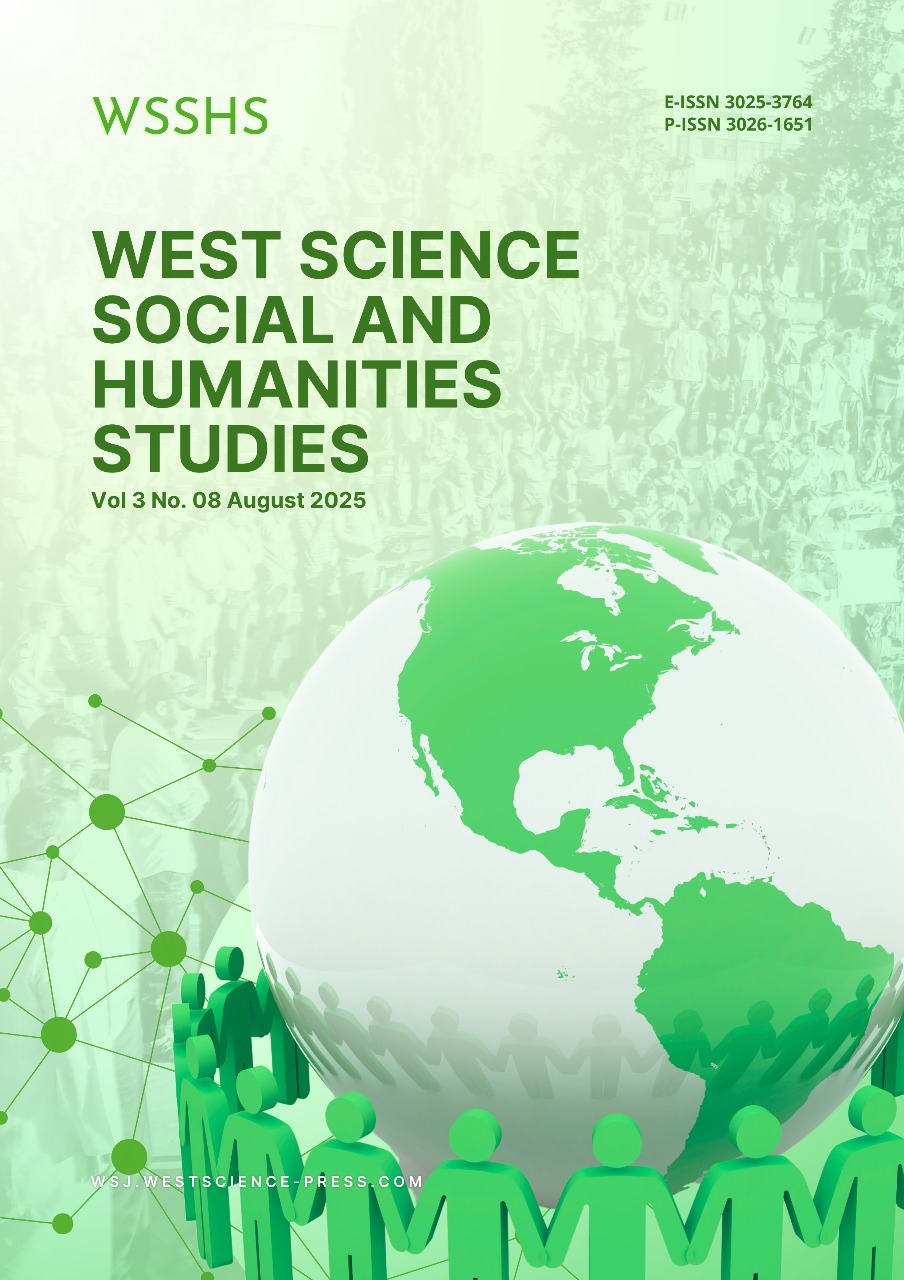
The Impact of Local Story Packaging, Educational Activities, and Traditional Branding on Destination Attractiveness through Positive Emotions in Yogyakarta
DOI:
https://doi.org/10.58812/wsshs.v3i08.2179Keywords:
Local Story Packaging, Educational Activities, Traditional Branding, Positive Emotions, Destination AttractivenessAbstract
This study examines the role of local story packaging, educational activities, and traditional branding in enhancing destination attractiveness, with positive emotions as a mediating variable, in the context of cultural tourism in Yogyakarta, Indonesia. Using a quantitative approach with 250 respondents and data analysis employing Structural Equation Modeling–Partial Least Squares (SEM-PLS 3), the findings reveal that all three independent variables significantly influence positive emotions and destination attractiveness. Furthermore, positive emotions are shown to mediate these relationships, highlighting their central role in shaping tourists’ perceptions and experiences. The study contributes to tourism literature by confirming the importance of culturally grounded strategies in destination marketing and provides practical implications for stakeholders in developing emotionally engaging, authentic, and sustainable tourism experiences.
References
[1] V. P. Ramadani and H. Sukmana, “Boosting Local Economy Through Strategic Tourism Development in Indonesia,” Acad. Open, vol. 9, no. 2, pp. 10–21070, 2024.
[2] S. Syakdiah, “Dynamics of tourism in special district of Yogyakarta,” Pros. Semnasfi, vol. 1, no. 1, 2017.
[3] I. B. M. W. Parta and I. A. K. Maharani, “CULTURAL TOURISM IN INDONESIA: SYSTEMATIC LITERATURE,” 2023.
[4] A. Wijayanti and J. Damanik, “Analysis of the tourist experience of management of a heritage tourism product: case study of the Sultan Palace of Yogyakarta, Indonesia,” J. Herit. Tour., vol. 14, no. 2, pp. 166–177, 2019.
[5] G. N. Budiutami, A. A. Ma’rof, H. Abdullah, and P. Kunasekaran, “The influence of tolerance, prosocial behavior, cultural openness, and social identity on attitude towards tourists: A quantitative study among local residents in Yogyakarta, Indonesia,” Int. J. Acad. Res. Bus. Soc. Sci. https//doi. org/10.6007/ijarbss/v14-i12/24038, 2024.
[6] M. Khater, O. Ibrahim, F. Al-Salim, and M. Faik, “Weaving tales: the impact of storytelling in tourism guides on cultural immersion,” Tour. Recreat. Res., pp. 1–16, 2025.
[7] A. H. G. Kusumah and T. Andrianto, “Narrative crafting in tourism destinations: An autoethnographic exploration of storytelling techniques for tour guides,” J. Tour. Sustain., vol. 3, no. 1, pp. 19–27, 2023.
[8] P. S. J. Kennedy, S. J. L. Tobing, R. L. Toruan, and R. M. Simanullang, “Strategi Pemasaran Menggunakan Storytelling Cerita Legenda Pada Situs Toba Kaldera: Pusuk Buhit Sebagai Tempat Awal Muasal Suku Batak,” Fundam. Manag. J., vol. 8, no. 1, pp. 119–127, 2023.
[9] E. N.-A. Solomon, L. K. Adu-Debrah, and S. M. Braimah, “Promoting tourism destinations through storytelling,” in Global perspectives on strategic storytelling in destination marketing, IGI Global Scientific Publishing, 2022, pp. 117–135.
[10] R. W. Doughty and V. Carmichael, “Storytelling,” in The Albatross and the Fish, University of Texas Press, 2011, pp. 1–8.
[11] R. Jatinurcahyo and E. Brahmanto, “IMPLEMENTASI PEMBANGUNAN KEPARIWISATAAN MELALUI REVITALISASI BUDAYA DI DAERAH ISTIMEWA YOGYAKARTA,” J. Sains Manaj., vol. 7, no. 1, pp. 57–65, 2025.
[12] S. Novita, “Cultural and Spiritual Representation in’Jiwa Jagad Jawi’for Destination Branding,” Mediat. J. Komun., vol. 17, no. 2, pp. 412–425, 2024.
[13] M. Kanzunnudin, “Peran Pariwisata dalam Pelestarian Kesenian Tradisional,” Gema Wisata, vol. 9, no. 1, p. 26, 2011.
[14] E. Nursanty, D. Rusmiatmoko, and I. W. A. Widiantara, “Bridging traditions: Placemaking and authenticity in architecture for city branding,” 2024.
[15] W. P. Astuti, “Upaya Pemasaran Pariwisata Kabupaten Ponorogo Melalui City Branding Dalam Meningkatkan Kunjungan Wisatawan (Studi Kasus pada City Branding Kabupaten Ponorogo dengan Tagline ‘Ethnic Art of Java’).” Universitas Brawijaya, 2017.
[16] C.-Y. Luo, C.-H. Tsai, C.-H. Su, and M.-H. Chen, “From stage to a sense of place: The power of tourism performing arts storytelling for sustainable tourism growth,” J. Travel Tour. Mark., vol. 40, no. 8, pp. 728–743, 2023.
[17] Y. Y. S. Zhong, J. Busser, and S. Baloglu, “A model of memorable tourism experience: The effects on satisfaction, affective commitment, and storytelling,” Tour. Anal., vol. 22, no. 2, pp. 201–217, 2017.
[18] R. G. Trisoko, R. Yanti, and R. P. Andita, “The power of local culture in regional tourism capital development,” Indones. Tour. J., vol. 1, no. 3, pp. 172–185, 2024.
[19] G. S. Aidoo, C. O. Kwaning, A. K. Opoku, A. Owusu, V. Owusu–Ansah, and E. O. Afriyie, “Cultural tourism, place branding, and sustainable development: The role of community engagement, visitor’s satisfaction and environmental awareness,” Edelweiss Appl. Sci. Technol., vol. 8, no. 6, pp. 9609–9632, 2024.
[20] M. Raimkulov, H. Juraturgunov, and Y. Ahn, “Destination attractiveness and memorable travel experiences in silk road tourism in Uzbekistan,” Sustainability, vol. 13, no. 4, p. 2252, 2021.
[21] G. Ariya, B. Wishitemi, and N. Sitati, “Tourism destination attractiveness as perceived by tourists visiting Lake Nakuru National Park, Kenya,” Int. J. Res. Tour. Hosp., vol. 3, no. 4, pp. 1–13, 2017.
[22] M. de Freitas Coelho and M. de Sevilha Gosling, “Factores de Atractividad Turística Percibida: Impactos en la reputación del destino y en la intención de recomendarlo a través de Internet,” Estud. y Perspect. en Tur., vol. 26, no. 3, pp. 509–530, 2017.
[23] W. Jing and O. K. Loang, “China’s Cultural Tourism: Strategies for Authentic Experiences and Enhanced Visitor Satisfaction,” Int. J. Bus. Technol. Manag., vol. 6, no. 1, pp. 566–575, 2024.
[24] 韓智淑, “슬로시티 매력과 방문객 만족, 행동의도와의 관계,” 관광학연구, vol. 34, no. 4, pp. 167–182, 2010.
[25] N. Cao, “Storytelling and its effects on tourist experience,” 2019.
[26] Z. Ghaderi, M. J. Mahdavizadeh, M. Rajabi, and C. M. Hall, “Does storytelling affect destination image, destination personality, and tourists’ behavioural intention?,” Anatolia, vol. 35, no. 2, pp. 313–325, 2024.
[27] S. Tandjaoui, “Le surtourisme: L’exploitation des TIC dans la gestion du surtourisme”.
[28] X. Zhang and T. Ramayah, “Solving the mystery of storytelling in destination marketing: A systematic review,” J. Hosp. Tour. Manag., vol. 59, pp. 222–237, 2024.
[29] Е. А. Ветрова, Е. Г. Масленникова, and А. П. Соколова, “Образовательный туризм как вид образовательной услуги,” Экономика и предпринимательство, no. 10 (147), p. 370, 2022.
[30] P. Selvakumar, S. Seenivasan, S. Raha, S. Ravikumar, and S. Gandhimathi, “Educational Tourism,” in Technological and Managerial Approaches to Fostering Sustainable Travel, IGI Global, 2024, pp. 125–150.
[31] G. Orduna and C. Urpí, “Turismo cultural como experiencia educativa de ocio,” Polis. Rev. Latinoam., no. 26, 2010.
[32] C. M. Son, C. S. Soon, and K. K. Sok-yong, “Exploring the impact of cultural heritage on destination branding and tourist experiences: Perspective from South Korea,” J. Hosp. Tour. Manag., vol. 6, no. 1, pp. 1–10, 2023.
[33] K. N. Hammouda, “Heritage as a Key Element of Cities and Destinations Branding,” ARCHive-SR, vol. 3, no. 4, pp. 32–38, 2019.
[34] K. Jamil, A. Anwar, and S. A. Baig, “Building Brand Authenticity and Strategies for Genuine Destination Experiences,” in Destination Branding and Bias in Ecotourism, IGI Global Scientific Publishing, 2025, pp. 75–104.
[35] C. Zhao, “Strategies for promoting the value of tourist cultural and creative brands based on cultural elements,” in E3S Web of Conferences, EDP Sciences, 2021, p. 3028.
[36] A. V. Tiwari, N. Bajpai, and P. Pandey, “The role of human emotions in memorable tourism experience and revisit intention,” Tour. Manag. Stud., vol. 19, no. 1, pp. 15–27, 2023.
[37] S. Kovačić and I. Šagovnović, “Exploring the relationship between tourists’ emotional experience, destination personality perception, satisfaction and behavioral intentions,” Psihologija, vol. 56, no. 3, pp. 371–398, 2023.
[38] G. Prayag, S. Hosany, and K. Odeh, “The role of tourists’ emotional experiences and satisfaction in understanding behavioral intentions,” J. Destin. Mark. Manag., vol. 2, no. 2, pp. 118–127, 2013.
[39] G. Walters and S. Li, “The role and influence of emotions on tourist behaviour,” in The Routledge handbook of consumer behaviour in hospitality and tourism, Routledge, 2017, pp. 46–54.
[40] C. J. White, “Culture, emotions and behavioural intentions: Implications for tourism research and practice,” Curr. issues Tour., vol. 8, no. 6, pp. 510–531, 2005.
[41] C. Iban, A. Nuryani, H. Rahayuningsih, and K. B. Aji, “Strengthening Tourism Products Through Storytelling Exploration in Kemiriombo, Gerbosari Village, Samigaluh District, Kulonprogo Regency,” JELAJAH J. Tour. Hosp., vol. 5, no. 2, 2024.
[42] S. Garcês, “Gastronomy Experiences, Authenticity, and Storytelling in Tourism Destinations: A Conceptual Paper,” in Cultural, Gastronomy, and Adventure Tourism Development, IGI Global, 2024, pp. 188–203.
[43] Y. Dong and K.-H. Kim, “A Study on the New Media Communication Strategies of Museum Brands from the Perspective of Transmedia Narrative Theory-Centered on the Shenyang Palace Museum,” 중국문화연구, vol. 66, pp. 55–78, 2024.
[44] P. A. Permatasari and L. Cantoni, “Indonesian tourism and batik: an online map,” E-Review Tour. Res., vol. 16, no. 2/3, 2019.
[45] N. L. Sekarrini and S. Rahayu, “Pengaruh Experiential Value Dan Place Food Image Yogyakarta Terhadap Behavioral Intentions Wisatawan Domestik,” Ekon. dan Bisnis, vol. 23, no. 1, pp. 29–36, 2018.
[46] W. Hadi, “Potensi Wisata Kulineri dan Pendidikan di Pesona Alam Dusun Sendang Kumitir Desa Kembang Arum Turi Sleman sebagai Daerah Tujuan Wisatawan,” Media Wisata, vol. 15, no. 1, 2017.
[47] M. D. Wahyudi and A. Ratnasari, “Analisis City Branding Jogja Istimewa dalam Memasarkan Daerah Yogyakarta,” Pros. Manaj. Komun., vol. 2, no. 2, pp. 441–447, 2016.
[48] A. Yuli, “City branding sebagai strategi pengembangan pariwisata ditinjau dari aspek hukum merek (Studi kasus city branding daerah istimewa yogyakarta sebagai daerah tujuan wisata unggulan di indonesia),” QISTIE, vol. 5, no. 1, 2011.
[49] E. Kristina, J. Selamet, and A. Brahma, “Creating a visual destination brand design for Kotagedeâ€TM s cultural heritage,” in International Conference of Innovation in Media and Visual Design, 2020, pp. 20–35.
Downloads
Published
Issue
Section
License
Copyright (c) 2025 Anggrany Chaniago, Muhamad Ammar Muhtadi, Tera Lesmana

This work is licensed under a Creative Commons Attribution-ShareAlike 4.0 International License.



















 Facebook
  Instagram
  Twitter
  Youtube
  westscience.journals@gmail.com