
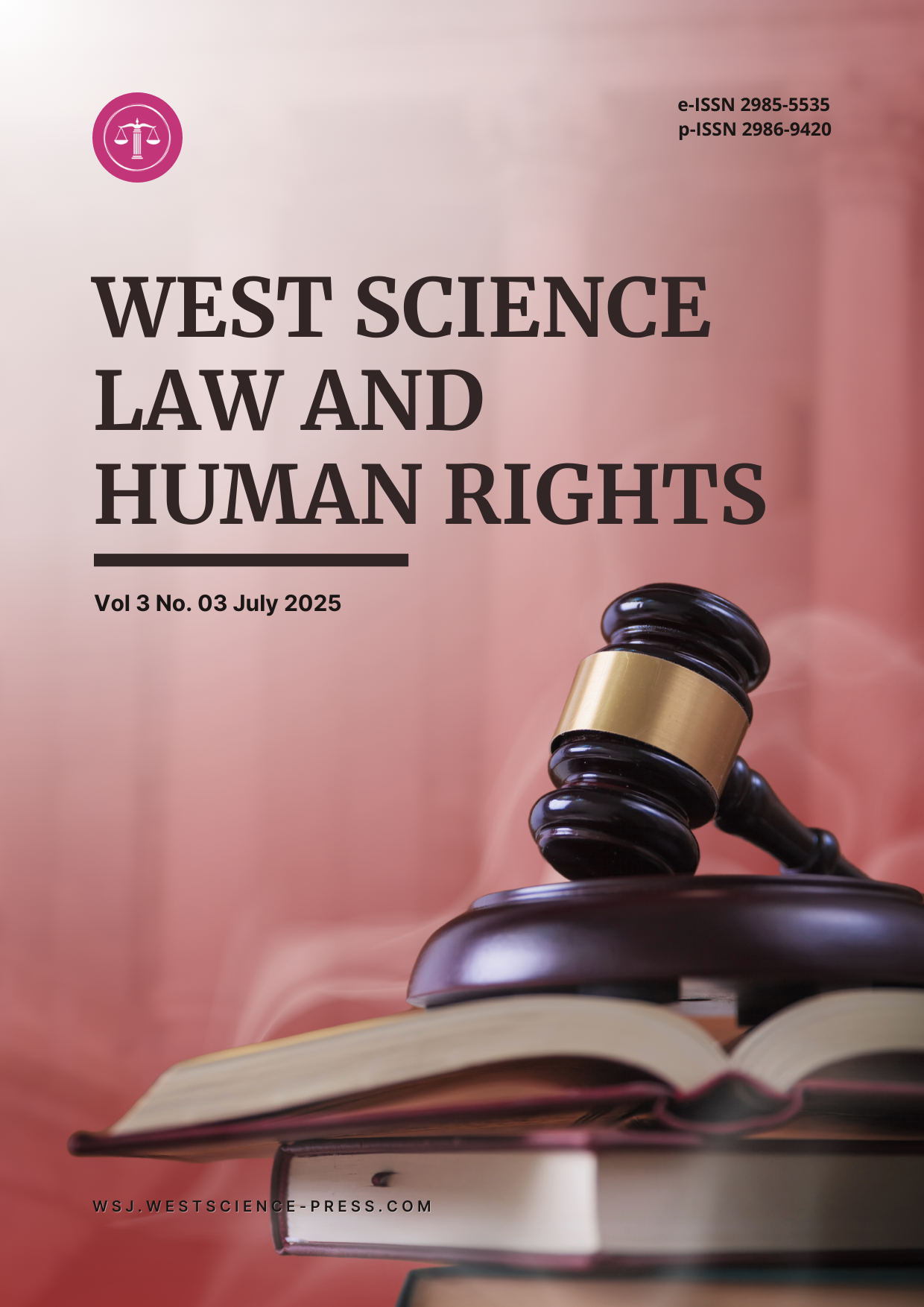
Personal Data Privacy in Social Media Platform: Governance, Ethics, an Regulatory Measures
DOI:
https://doi.org/10.58812/wslhr.v3i03.2033Keywords:
Personal Data Privacy, Social Media Platform, Data Governance, Platform ResponbilityAbstract
This study explores the complexities of personal data privacy in the context of social media platforms, and existing regulatory frameworks. Trough a multidisciplinary analytical approach, this study evaluates the relationshipbetween users privacy rights, data management practies by platforms, and corporate legal liability. As a theoretical frameworks, the theory of privacy rights, data governance theory, and the concept of platforms responbilityare used toanalyze this problem. The results of the study revealed that there is a significant gap between the business model of platforms that rely on data extraction and user privacy expectations. Also identified are the limitations of current regulations in the face of rapid technological dynamics. This research contributes to the literature by introducing an integrated privacy governance model, which seeks to accommodate the needs of a more adaptive regulatory stakeholder. These findings have important implications for policy development, industry practices, and improved digital literacy for users.
References
[1] Zubof, S. (2019). The age of surveillance capitalism: The flight for a human future at the new frontier of power. PublicAffairs.
[2] Gillespie, T. (2018). Custodians of the internet: Platforms, content moderation, and the hidden decisions that shape social media. Yale University Press.
[3] Van Dijck, J., Poell, T., & de Waal, M. (2018). The platform society: Public values in a connective world. Oxford University Press.
[4] Helberger, T. (2018). Governing online platform: From conteted to cooperative responsibility. The Information Society, 34(1), 1-14. https://doi.org./.10.1080/1369118X.2019.1573914
[5] Pasquale, F. (2015). The black box society: The secret algorithms that control money and information. Harvard University Press.
[6] Warren, S. D., & Brandeis, L. D. (1890). The right to privacy. Harvard Law Review, 4(5), 193-220.
[7] Westin, A.F. (1967). Privacy and freedom. Atheneum.
[8] Nisenbaum, H. (2010). Privacy in Context: Technology, policy, and the integraty of social life. Stanford University Press.
[9] Zubof, S. (2019). The age of surveillance capitalism: The flight for a human future at the new frontier of power. PublicAffairs.
[10] Webber, R. H. (2018). Governance of data and artifical intelligence. Journal of the Internet Law, 22(3), 3-14.
[11] Gillespie, T. (2018). Custodians of the internet: Platforms, content moderation, and the hidden decisions that shape social media. Yale University Press.
[12] Solove, D. J. (2021). The myth of the privacy paradox. George Washington Law Review, 89(1), 1-51.
[13] Kemp,S. (2023). Digital 2023: Global digital overview. DataReportal. https://datareportal.com/reports/digital-2023-global-overview-report
Downloads
Published
Issue
Section
License
Copyright (c) 2025 Aprilia Dwi Santoso Putri, Prasastyanti

This work is licensed under a Creative Commons Attribution-ShareAlike 4.0 International License.






















 Facebook
  Instagram
  Twitter
  Youtube
  westscience.journals@gmail.com