
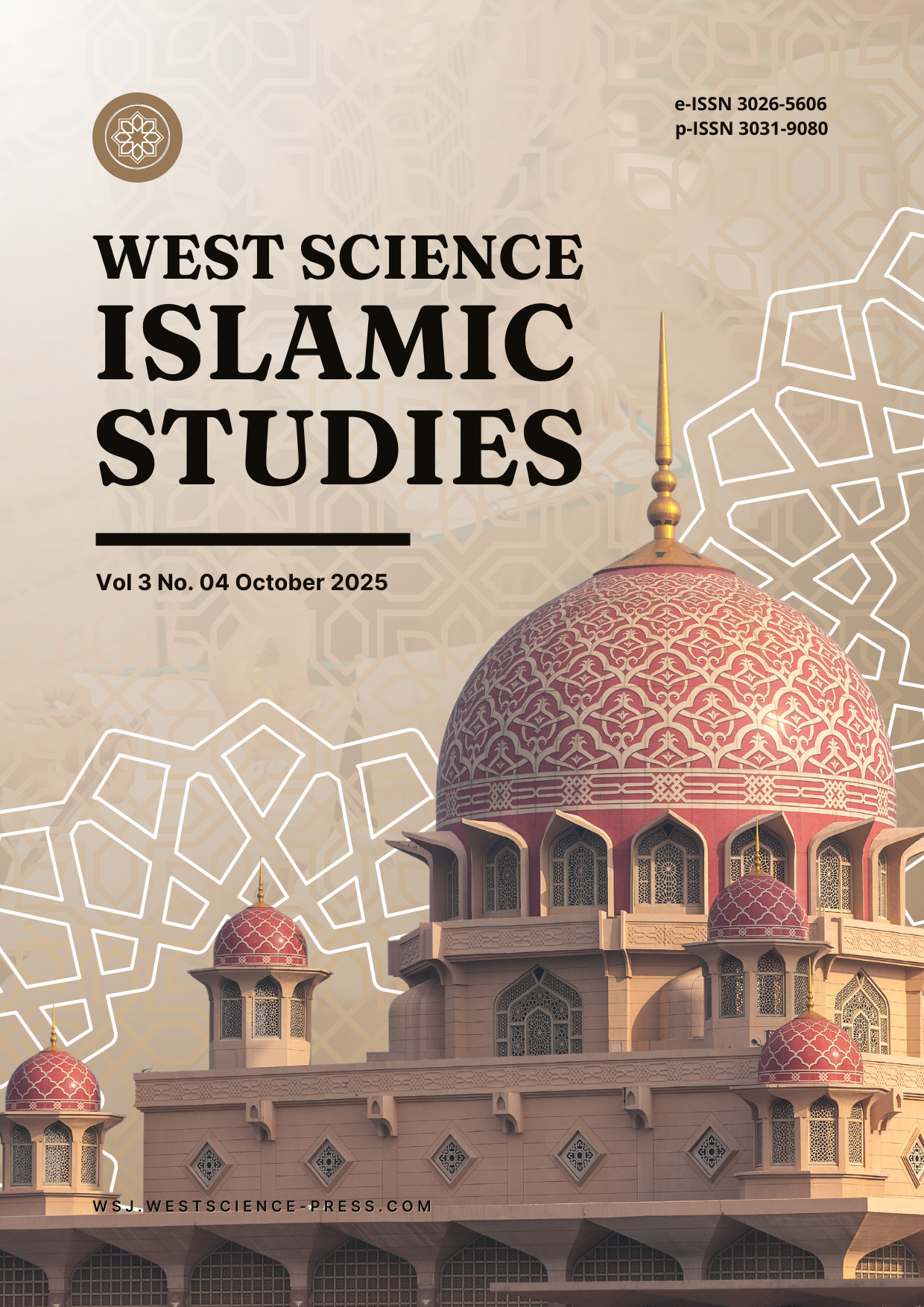
Islam and the Green Economy in Review of Sharia Principles for Sustainable Business Practices
DOI:
https://doi.org/10.58812/wsiss.v3i04.2325Keywords:
Islam, Sharia Principles, Green Economy, Sustainable Business Practices, Ethical InvestmentAbstract
This study reviews the intersection of Islamic principles and green economy practices, emphasizing how Sharia law can guide sustainable business operations. Using a literature review approach, 15 scholarly articles from Google Scholar were analyzed to identify key Sharia-based concepts—such as stewardship (khalifah), avoidance of waste (israf), ethical investment, and social responsibility—that support environmentally sustainable and socially responsible business practices. The findings reveal that integrating Sharia principles into corporate strategies promotes ecological preservation, ethical governance, and long-term economic resilience. Practical approaches highlighted include Sharia-compliant financing, green supply chain management, and eco-friendly corporate governance. This study underscores the potential of Islamic jurisprudence as a framework for advancing the green economy, offering insights for scholars, policymakers, and business practitioners seeking to harmonize religious ethics with sustainable development.
References
[1] V. Weick, “Green Economy and sustainable development,” in Waste management and the Green Economy, Edward Elgar Publishing, 2016, pp. 121–150.
[2] H. Souad, “The Green Economy as a Solution for Sustainable Development,” Sci. J. King Faisal Univ. Humanit. Manag. Sci., pp. 1–7, 2023.
[3] С. В. Митрофанов, “Роль агрохимического обеспечения в переходе к устойчивой модели растениеводства,” in Научно-инновационные аспекты аграрного производства: перспективы развития: материалы II Нац. науч.-практ. конф. с междунар. участием, посвящ. памяти д-ра техн. наук, проф. Николая Владимировича Бышова (Рязань, 24 нояб. 2022 г.).-Рязань: Рязан. гос. агроте, 2022, p. 59.
[4] N. Herari et al., Advertising: Methods, Research and Practices. Sayak Pal, 2024.
[5] M. Kahf, “The role of waqf in improving the ummah welfare,” in International Seminar on Waqf as a Private Legal Body, Medan, Indonesia, 2003, pp. 1–26.
[6] M. U. Chapra, “The Islamic vision of development in the light of Maqāsid al-sharī ‘ah,” Islam. Res. Train. Inst. Islam. Dev. Bank Jeddah, DOI, vol. 10, 2008.
[7] K. Yasmeen, K. Yasmin, and S. Al Abri, “Islamic framework for sustainable development: Islamic framework for sustainable development,” Int. J. Islam. Financ. Sustain. Dev., vol. 16, no. 4, pp. 136–160, 2024.
[8] H. ABDUL and M. M. MADIAN, “TINJAUAN LITERATUR TENTANG ETIKA BISNIS SYARIAH BERDASARKAN PRINSIP AMANAH DAN ADIL,” Kaji. Ekon. DAN Akunt. Terap. Учредители Asos. Ris. Ilmu Manaj. dan Bisnis Indones., vol. 1, no. 4, pp. 124–134, 2024.
[9] Z. Maasah, “EKONOMI HIJAU DALAM PERSPEKTIF HUKUM EKONOMI ISLAM,” HEI EMA J. Ris. Hukum, Ekon. Islam. Ekon. Manaj. dan Akunt., vol. 4, no. 2, pp. 102–111, 2025.
[10] K. Tondoyekti, “Ekonomi Hijau dan Bisnis Syariah: Mempromosikan Bisnis yang Berkelanjutan dan Bertanggung Jawab,” J. Ekon. Bisnis, Manaj. Dan Akunt., vol. 4, no. 2, pp. 873–882, 2024.
[11] N. Kurniati and H. Mursalin, “Pandangan islam terhadap upaya pelestarian lingkungan,” Mauriduna J. Islam. Stud., vol. 4, no. 2, pp. 212–220, 2023.
[12] Z. Fadli and M. Sarjan, “Etika Pengelolaan Sumber Daya Alam Berkelanjutan Dalam Perspektif Islam,” Lamda J. Ilm. Pendidik. MIPA dan Apl., vol. 4, no. 1, pp. 44–48, 2024.
[13] R. A. H. Kusumo and M. R. H. Rokhmatulloh, “Zero Waste sebagai Metode Sustainable Green Economy (Ekonomi Hijau Berkelanjutan),” Reinf. J. Sharia Manag., vol. 4, no. 1, pp. 25–39, 2025.
[14] E. R. Kismawadi, M. Irfan, R. Haron, and M. Masitah, “Bridging finance and sustainability: Islamic financial institutions’ contributions to the transition to sustainable energy,” in Issues of sustainability in AI and new-age thematic investing, IGI Global Scientific Publishing, 2024, pp. 138–161.
[15] Б. С. Батаева, “Региональная модель корпоративной социальной ответственности (на примере исламских стран),” Национальные интересы приоритеты и безопасность, no. 3, pp. 63–71, 2010.
[16] E. Almustafa, “Islamic Financing Mechanisms for Renewable Energy Projects: Mapping Research Trends and Future Directions,” Int. J. Energy Econ. Policy, vol. 15, no. 3, p. 453, 2025.
[17] M. K. Hassan, A. Muneeza, and R. Hasan, Islamic finance and sustainable development. Cambridge University Press, 2025.
[18] A. Sekreter, “Green finance and Islamic finance,” Int. J. Soc. Sci. Educ. Stud., vol. 4, no. 3, pp. 115–121, 2017.
[19] S. Shovkhalov, “Islamic economic principles and their contributions to ecological sustainability and green economy development,” in E3S Web of Conferences, EDP Sciences, 2024, p. 4009.
[20] W. Y. Andini, S. H. Syarif, S. M. A. Shafiyah, and A. F. R. Afif, “Integrasi prinsip ekonomi Islam dalam penerapan ekonomi hijau di Indonesia: Menuju pembangunan berkelanjutan,” J. Econ. Bus., vol. 2, no. 2, pp. 247–254, 2024.
[21] N. Permana and E. Wahyu, “Kolaborasi Antara Ekonomi Hijau dan Ekonomi Islam dalam Mencapai Kesejahteraan Sosial dan Lingkungan: Analisis Terhadap Strategi Pembangunan Berkelanjutan Society 5.0,” Al-Urban J. Ekon. Syariah dan Filantr. Islam, vol. 8, no. 1, pp. 106–121, 2024.
[22] M. H. Kamali, “Islam and sustainable development,” ICR J., vol. 7, no. 1, pp. 8–26, 2016.
[23] W. F. Nur and M. F. Wibowo, “Konsep Konsumsi Berkelanjutan dalam Islam: Integrasi Ekonomi Hijau dalam Mengurangi Gaya Hidup Tabzir dan Israf,” Islamica, vol. 8, no. 2, pp. 16–26, 2024.
[24] M. Alif, M. Zidane, and H. Yasir, “PERAN HUKUM ISLAM DALAM MENJAGA ETIKA BISINIS DI ERA EKONOMI BERKELANJUTAN,” Media Ris. Bisnis Manaj. Akunt., vol. 1, no. 2, pp. 142–149, 2025.
[25] N. Sofia Gumilang, S. IP, and S. H. MMRS, “ETIKA BISNIS ISLAM: IMPLEMENTASI PRINSIP KEADILAN DAN TANGGUNG JAWAB DALAM EKONOMI SYARIAT,” IP, MMRS, Safari Hasan, ETIKA BISNIS Islam IMPLEMENTASI PRINSIP KEADILAN DAN TANGGUNG JAWAB DALAM Ekon. SYARIAT (June 27, 2025), 2025.
[26] H. Mirzal, I. Zaki, and M. B. F. Zusak, “How Does Islam Support the Green Economy? A Study on Turath Perspective,” J. Islam. Monet. Econ. Financ., vol. 10, no. 4, pp. 657–678, 2024.
[27] M. Mutmainah, A. Hamzah, and G. M. Argarini, “Green Economy In Shariah Economics Perspective Improving Community Welfare,” in Proceeding of International Annual Conference on Islamic Economy and Law, 2023, pp. 317–325.
[28] E. Pandikar, I. Affandi, D. Disman, and D. Sundawa, “Harmonizing economic principles, Islamic values, and entrepreneurial attitudes for a sustainable environment,” Yupa Hist. Stud. J., vol. 6, no. 2, pp. 188–197, 2022.
[29] L. Čekanavičius, R. Bazytė, and A. Dičmonaitė, “Green business: challenges and practices,” Ekonomika, vol. 93, no. 1, pp. 74–88, 2014.
[30] S. M. Abdullah, “Preservation of the Environment by Smart Energy Consumption,” ICR J., vol. 9, no. 1, pp. 76–96, 2018.
[31] ا. ن. حمد, “الرشد الاقتصادي وأهميته في تحقيق التنمية المستدامة في ضوء الشريعة الإسلامية,” مجلة العلوم الأساسـية, vol. 20, no. 30, pp. 635–670, 2025.
[32] A. M. A. A. Walenna and N. Wulantari, “Studi Komparatif Hukum Tabdzir dan 7 Waste dalam Proses Manufaktur untuk Meminimalkan Biaya (cost),” Pros. Konf. Integr. Interkoneksi Islam Dan Sains, vol. 1, pp. 1–6, 2018.
[33] N. Abd Manaf and I. M. Z. Abdelwahid, “Lean Management and Islamic Perspective; Convergence in Diversity,” in Spirituality in Management from Islamic Perspectives, 2013.
[34] A. Hamdi, S. Sukandi, and N. Tasliyah, “ANALISIS PRINSIP-PRINSIP PRODUKSI DALAM EKONOMI ISLAM: STUDI KOMPARATIF ANTARA KONSEP TRADISIONAL DAN KONTEMPORER,” Iltizam J. Ekon. dan Keuang. Islam, vol. 3, no. 1, pp. 113–121, 2025.
[35] M. K. Hassan and M. K. Lewis, “Islamic banking: An introduction and overview,” in Handbook of Islamic banking, Edward Elgar Publishing, 2007.
[36] A. Khanif, “Challenges in protecting religious minorities in Indonesia,” in Marginalisation and Human Rights in Southeast Asia, Routledge, 2022, pp. 87–101.
[37] M. O. Mohammad and S. Shahwan, “The objective of Islamic economic and Islamic banking in light of Maqasid Al-Shariah: A critical review,” Middle-East J. Sci. Res., vol. 13, no. 13, pp. 75–84, 2013.
[38] D. Arodha, “ETHICAL CORPORATE GOVERNANCE BASED ON ISLAMIC PERSPECTIVE,” Account. J. Ibrahimy, vol. 3, no. 1, pp. 10–20, 2025.
[39] F. Attirmidzi, “The Influence of Sharia Corporate Social Responsibility (Sharia CSR) on Corporate Image in the Halal Industry,” Ser. Ekon., vol. 2, no. 3, pp. 99–107, 2025.
[40] H. Ode, I. Natsir, and E. C. Mayndarto, “Shariah and Corporate Social Responsibility: A Comparative Analysis of Shariah-Compliant Businesses in Indonesia and Malaysia,” Sharia Oikonomia Law J., vol. 3, no. 1, pp. 80–91, 2025.
[41] A. S. Ibrahim and T. S. Tijjani, “The Ethical Compass of Islamic Corporate Social Responsibility: A Path to Sustainable Impact,” Corp. Soc. Responsib. Glob. Perspect. A Glob. Perspect., p. 173, 2024.
[42] N. Sikki, G. Tumbas, B. Mayusip, W. Mamengko, and D. J. Dotulong, “The Application of Islamic Business Ethics in Modern Markets: Principles, Challenges, and Opportunities in a Globalized Economy,” RIGGS J. Artif. Intell. Digit. Bus., vol. 4, no. 3, pp. 2050–2056, 2025.
[43] M. S. Islam, N. Karia, F. M. Taib, H. Ara, and S. Moeinzadeh, “Ethico-religious green supply chain management (GSCM): embedding Islamic ethics’ codes for improving environmental concerns,” J. Islam. Account. Bus. Res., vol. 13, no. 1, pp. 157–176, 2022.
[44] A. S. Asmadi and I. S. Saimy, “Integration of ESG Principles in Halal Logistics: Advancing Sustainable Practices in the Islamic Supply Chain,” Int. J. Res. Innov. Soc. Sci., vol. 8, no. 12, pp. 1791–1805, 2024.
Downloads
Published
Issue
Section
License
Copyright (c) 2025 Junet Kaswoto, Mukti Simamora, Puti Khairani Rijadi, Safier Ramdani, Eko Sudarmanto

This work is licensed under a Creative Commons Attribution-ShareAlike 4.0 International License.




















 Facebook
  Instagram
  Twitter
  Youtube
  westscience.journals@gmail.com